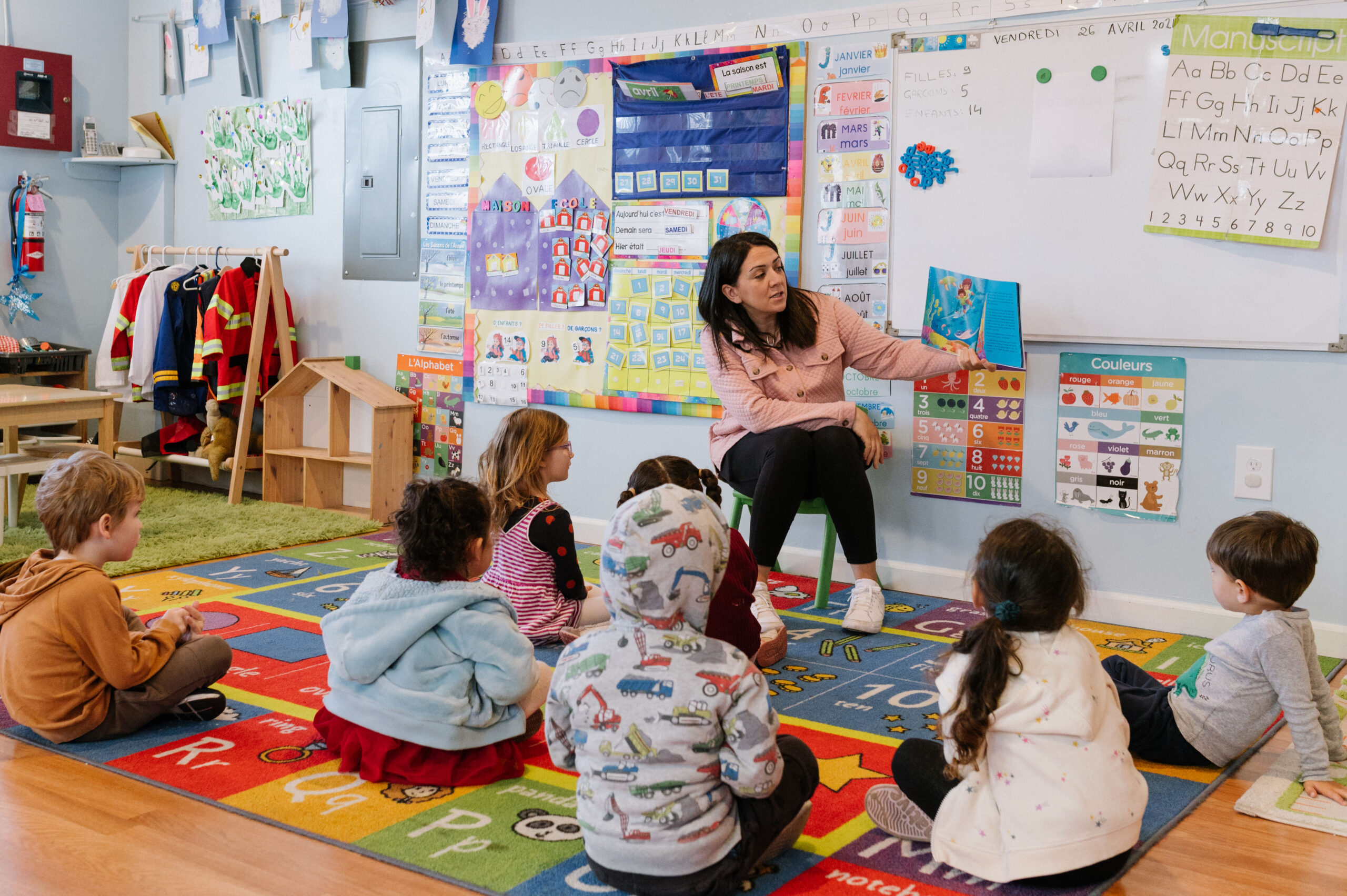
Choosing the right early learning path for your child is one of the most important decisions you need to make during their foundational years. Parents in California today have multiple options in front of them. French preschool, rooted in France’s national education framework, and California Transitional Kindergarten (TK), a bridge year before kindergarten designed to support school readiness.
At first glance, both settings welcome children aged four to five years old. But the experiences, expectations, and developmental outcomes are very different. In France, preschool is part of a structured, national curriculum focused on building independence, academic confidence, and strong language abilities. In California, TK emphasizes play-based learning, social development, and preparing students for entry into kindergarten the following year.
At Au Beau Séjour French Preschool (ABS) in Oakland, our Moyenne Section (MS) and Grande Section (GS) programs blend the academic rigor of France’s Éducation Nationale with the warmth, creativity, and social-emotional focus families expect in U.S. early childhood education. Our students receive the best of both worlds and leave more than ready for elementary school, whether in the U.S. or abroad.
Below, we break down how the French preschool model compares to California TK from a parent’s point of view, so you can make the best choice for your child.
1. Age & Enrollment
California Transitional Kindergarten:
TK in California is designed for children turning five during a specific window determined by the state. It is voluntary and is typically one year before kindergarten. As part of the public school system, access depends on district availability, and the structure of programs can vary widely.
Because TK has been expanding to universal access across California, many families see it as a cost-effective option, but it may not always match a child’s developmental or language needs.
French Moyenne Section:
In France, education has been mandatory since age three (as of 2019), making Moyenne Section (age four) a core stage of formal learning. Children qualify based on calendar year age, not school-year cutoffs. Moyenne Section (age five) is considered the final year of preschool and the start of primary preparation.
This continuity from age three to five ensures that learning builds year after year within a consistent system.
The Au Beau Séjour Advantage:
ABS follows the French age-group progression, meaning children enter a continuous early-education pathway with stable expectations, routines, and developmental goals. Families do not have to worry about whether their child “qualifies” based on cutoff timelines; they are placed where they will grow best.
ABS also offers nurturing care for younger learners (starting at 2+), allowing children to adjust to school gradually and confidently before formal academics begin.
2. Curriculum Focus
California Transitional Kindergarten:
TK programs use the California Common Core Standards to guide lessons. These focus on:
- Early English literacy and phonics
- Foundational numeracy
- Social-emotional skills
- Learning to follow instructions, work in groups, and build stamina for school routines
Instruction is highly play-based, with shorter learning blocks and frequent transitions. Lessons introduce early academics gently through hands-on activities.
French Moyenne Section:
French preschool is guided by France’s Éducation Nationale curriculum, which is consistent across the entire country. It emphasizes:
- Rich and structured language development
- Fine motor skills and handwriting preparation
- Logical and mathematical reasoning
- Investigation of the natural and social world
- Physical coordination and mastery
- Arts and creative expression are integrated daily
Moyenne Section is often described as the first academic year, giving children a head start on elementary expectations.
The Au Beau Séjour Advantage:
At ABS, learning is joyful, playful, and deeply meaningful. Children engage in guided discovery through projects, storytelling, group work, and hands-on experiences, all in French. They not only learn content but build habits of curiosity, motivation, and resilience that support success for years to come.
3. Language & Literacy
California Transitional Kindergarten:
Most instruction is in English. Foreign language exposure is generally limited or non-existent at this age. Literacy goals include:
- Letter recognition
- Sound identification
- Name writing
- Early sight words
By the end of the year, children may read simple phrases and write short sentences.
French Moyenne Section:
Language is central to French early education. In Moyenne Section, students learn through immersive oral communication: speaking, listening, retelling stories, and memorizing poems.
They also begin:
- Phonemic awareness
- Sound-letter correspondence
- Syllable blending
- Early reading
- Structured handwriting practice (often including early cursive)
Children learn to use language to think, reason, and collaborate.
The Au Beau Séjour Advantage:
Bilingualism! Students not only master early literacy but do so through French immersion, building strong communication skills that transfer to English and beyond. English remains present and strong through home life and community, but bilingual exposure enhances it rather than delays it.
4. Mathematics & Reasoning
California Transitional Kindergarten:
Math instruction in TK introduces:
- Counting to 100
- Recognizing numbers
- Basic addition and subtraction within 10
- Shapes and simple measurement
Activities tend to be hands-on, using manipulatives and stories to build understanding.
French Moyenne Section:
French math begins with conceptual understanding:
- Grouping, comparing, and decomposing numbers
- Patterning and sequencing
- Spatial awareness and geometry basics
- Practical reasoning and early logic
Problem-solving is emphasized early, with children encouraged to explain their thinking.
The Au Beau Séjour Advantage:
Students are challenged to think critically and reason mathematically, building a solid foundation for first grade and beyond. They develop confidence in reasoning and number play, helping them excel in future STEM learning.
5. Social-Emotional & Independence
California Transitional Kindergarten:
Social-emotional development is a major focus:
- Building friendships
- Cooperation
- Following directions
- Emotional regulation
- Working through conflicts
Children learn to adapt to a school community and follow teacher direction.
French Moyenne Section:
While social-emotional learning is important, French classrooms place distinctive emphasis on independence, responsibility, and autonomy:
- Managing personal belongings
- Cleaning up materials independently
- Contributing to group routines
- Practicing respectful behavior
Children see themselves as capable, responsible members of a community.
The Au Beau Séjour Advantage:
Children leave GS as confident, independent learners ready to succeed in diverse school systems. They leave with confidence, not only academically, but as capable young citizens.
6. Enrichment & Whole-Child Development
California Transitional Kindergarten:
Enrichment offerings, such as art, music, or PE, vary by district resources and staff availability. Some TK classrooms integrate these subjects regularly, while others offer limited exposure.
French Moyenne Section:
Creative and physical activities are part of daily learning, including:
- Music
- Singing
- Visual arts
- Theater
- Motor development and sports
Children learn through movement as much as through conversation.
The Au Beau Séjour Advantage:
At ABS, creativity isn’t an “extra,” it’s a central pillar of growth and joy. A balanced program where academics, creativity, and well-being go hand in hand.
The ABS Difference
While California Transitional Kindergarten offers a solid start, the French system — especially when thoughtfully adapted like it is at ABS — takes early learning a step further.
ABS provides:
- Bilingual immersion that builds strong cross-language communication
- Academic rigor presented through warmth, curiosity, and hands-on experiences
- Independence and global awareness rooted in cultural understanding
- Small class sizes that ensure personal attention and meaningful social connections
- A nurturing community where each child’s individuality is honored
By the end of their French preschool journey, ABS students are:
- Academically ready
- Socially confident
- Linguistically flexible
- Open-minded and curious
- Prepared for U.S., French, or international elementary schools
They don’t just transition, they thrive.
Final Thoughts for Families
Choosing the right early education path isn’t about picking what’s popular; it’s about finding what aligns with your child’s needs and your family’s long-term goals.
If you value:
- Multilingualism and global citizenship
- Strong academic foundations built gently over time
- A community that celebrates culture and belonging
- Joyful discovery rooted in proven pedagogy
Then a French preschool like Au Beau Séjour could be an exceptional fit.
Parents don’t always know what their child will love or excel at when they’re only three or four years old, but giving them more language, more culture, and more confidence opens doors that only expand as they grow.