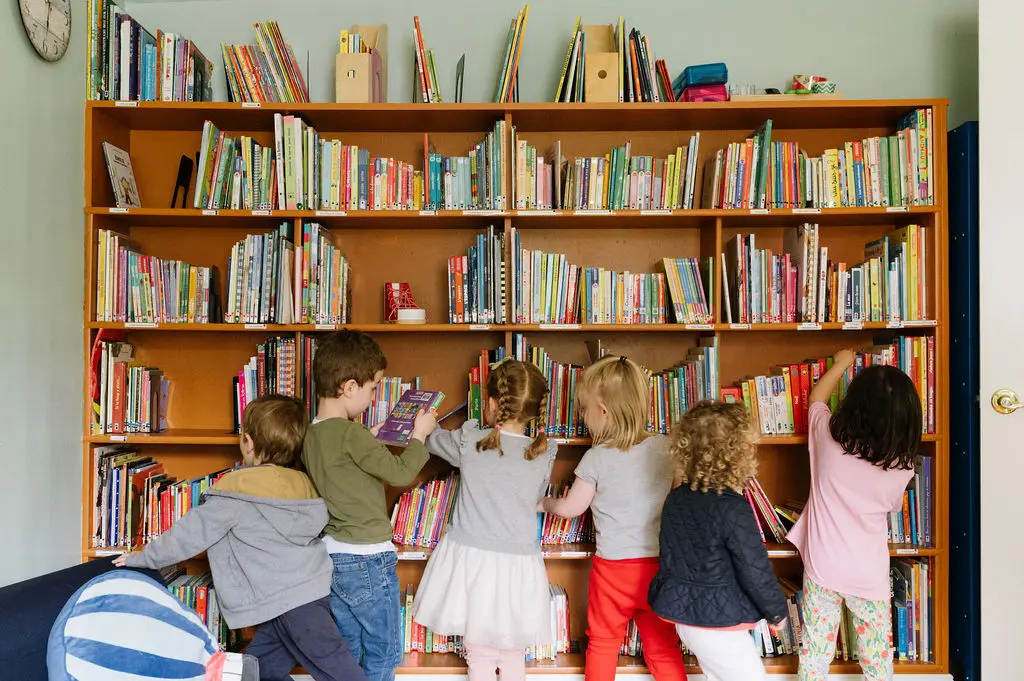
Walk into a well-run Maternelle classroom, and you’ll notice something right away. It’s active, but not chaotic. Children are moving, talking, building, and listening. There’s a hum to the room, a sense that something is always happening, but nothing feels rushed. At first glance, it might just look like play.
Look a little closer, and you’ll see something more intentional. A child retelling part of a story they heard earlier. Another might be carefully organizing materials for an activity. A small group negotiating roles in a pretend scenario, switching between listening and speaking with surprising focus. This is the Maternelle method.
What “Maternelle” Actually Means
The French Maternelle system is often described as preschool, but that translation doesn’t quite capture it. In France, Maternelle is the foundation of formal education. It’s where children begin the early stages of learning how to think, communicate, and engage with the world around them.
The emphasis is not on early academics in the traditional sense. It’s on building the underlying skills that make academic learning possible.
- Language development.
- Attention and listening.
- Memory and sequencing.
- Social interaction.
- Independence.
These are not treated as secondary. They are the curriculum. For families searching for something beyond standard childcare, a Maternelle curriculum in Oakland offers a different kind of starting point.
Play, But With Purpose
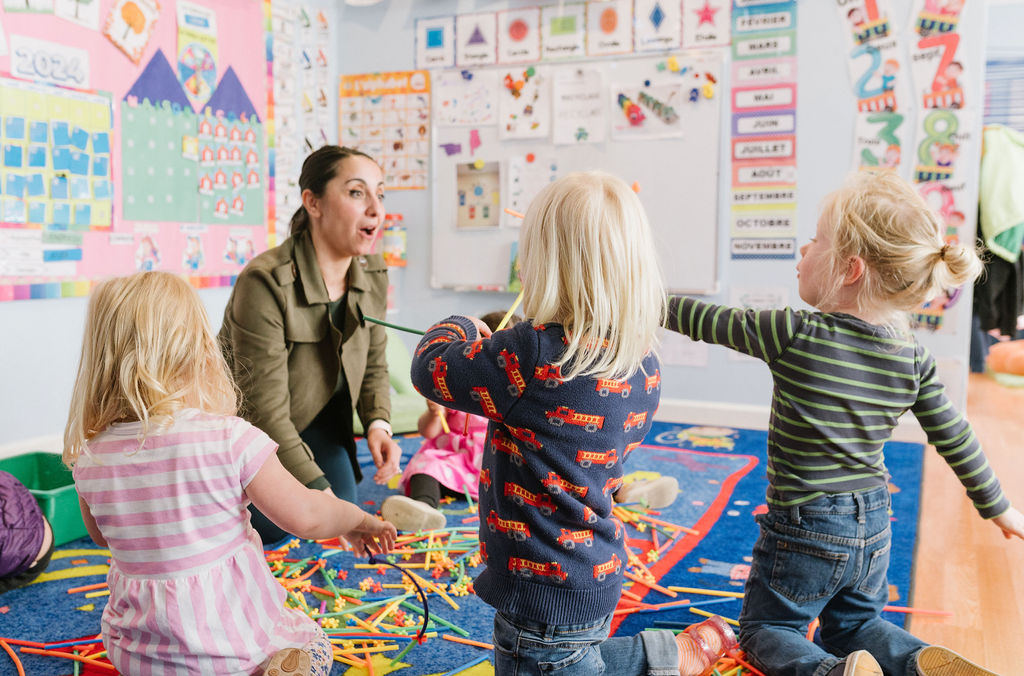
One of the biggest misunderstandings about Maternelle is the role of play.
Yes, children are playing. But it’s not unstructured or incidental. Play is used deliberately, almost like a teaching language. It’s how concepts are introduced, repeated, and deepened. A story read in the morning might reappear during imaginative play later in the day. Vocabulary from that story shows up again during art, or while children are building something together. The same ideas are revisited from different angles.
That’s what makes a play-based French preschool different from a program where play is simply a break between activities. Here, play is the activity. It’s where children test ideas, make connections, and build understanding over time.
Language as the Center of Everything
In a Maternelle classroom, language is everywhere. Children are constantly listening. Not just to instructions, but to stories, songs, conversations, and each other. Over time, they begin to recognize patterns. Certain phrases repeat. Certain words appear in familiar contexts.
At Au Beau Sejour French Preschool, this happens entirely in French. That might sound intimidating at first, especially for families new to immersion. But young children don’t approach language the way adults do. They don’t need to translate every word. They rely on tone, gesture, repetition, and context.
Most children go through a period where they listen more than they speak. That’s not hesitation. It’s absorption. When they do begin to speak, it often comes naturally, because the language has already been built through experience.
Structure Without Rigidity
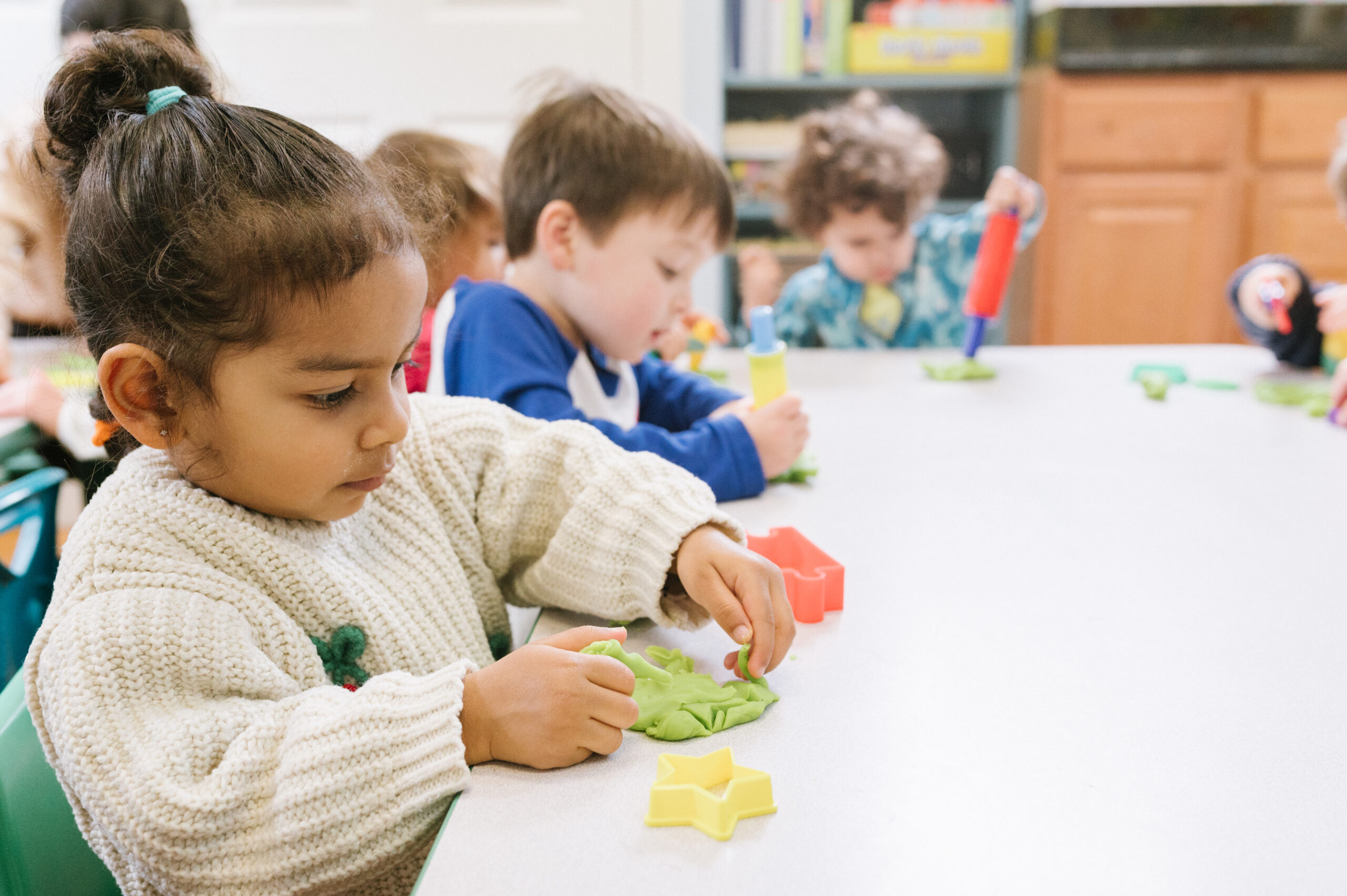
Another key part of the Maternelle method is structure. There is a clear rhythm to the day. Activities follow a predictable flow. Expectations are consistent. Children know what comes next, even if the specific activity changes. This structure supports creativity.
When children feel secure in their environment, they’re more willing to take risks. They try new things. They engage more deeply. They focus longer. In early childhood education, structure and flexibility are often seen as opposites. In practice, they work together.
At ABS, routines provide the framework, but within that framework, children explore, create, and interact freely.
A Different Kind of Academic Foundation
For parents comparing options, the difference often comes down to what “academic” really means. In some settings, academics show up as early worksheets or direct instruction. In a Maternelle-based program, academics are embedded in experience.
Children are building pre-literacy skills through storytelling and conversation. They’re developing early math reasoning through sorting, comparing, and problem-solving during play. They’re strengthening attention and memory through repetition and routine. The result is deeper learning.
By the time children move on to elementary school, they may not have followed a traditional academic path, but they have something just as important. They understand HOW to learn.
A Classroom That Feels Alive

If you spend time in a Maternelle classroom, you start to notice the difference. The way children listen, the way they interact with each other, and even the way they move through their day with growing confidence.
It doesn’t feel like daycare. It feels like the beginning of something. And for many families, that’s exactly what they’re looking for.
If this sounds interesting to you and your family, schedule a tour with us and get to know the Maternelle system a little better.