For a parent watching a French immersion classroom for the first time, there may be moments when translating seems like the obvious solution. A teacher gives an instruction in French, a child looks uncertain, and the natural instinct is to repeat the same instruction in English.
French immersion teachers often take a different approach. They may point to an object, demonstrate an action, use a picture, or repeat the phrase while providing another clue. The child gets an opportunity to work out the meaning while French remains the language of the interaction.
This approach is an important part of the language immersion method. Children gradually learn to understand French within the situations where it is actually being used, much like they developed an understanding of their first language through listening and experience.
Children Can Understand Before They Can Translate
Knowing a language does not require mentally converting every sentence into another language. When someone says “Good morning,” most English speakers understand the greeting immediately. They don’t need to define each word before responding.
Young children can begin developing the same direct connections in French. If a teacher says a familiar phrase every day while children put away their coats, the situation itself provides information about what those words mean. After enough exposure, children can respond appropriately without needing an English equivalent.
This is especially important for beginners. A child entering a French immersion preschool may initially rely heavily on gestures, tone of voice, facial expressions, and what classmates are doing. Those clues provide a bridge while their French comprehension develops. Understanding often grows well before children are comfortable speaking the language themselves.
Teachers Give Children Plenty of Clues
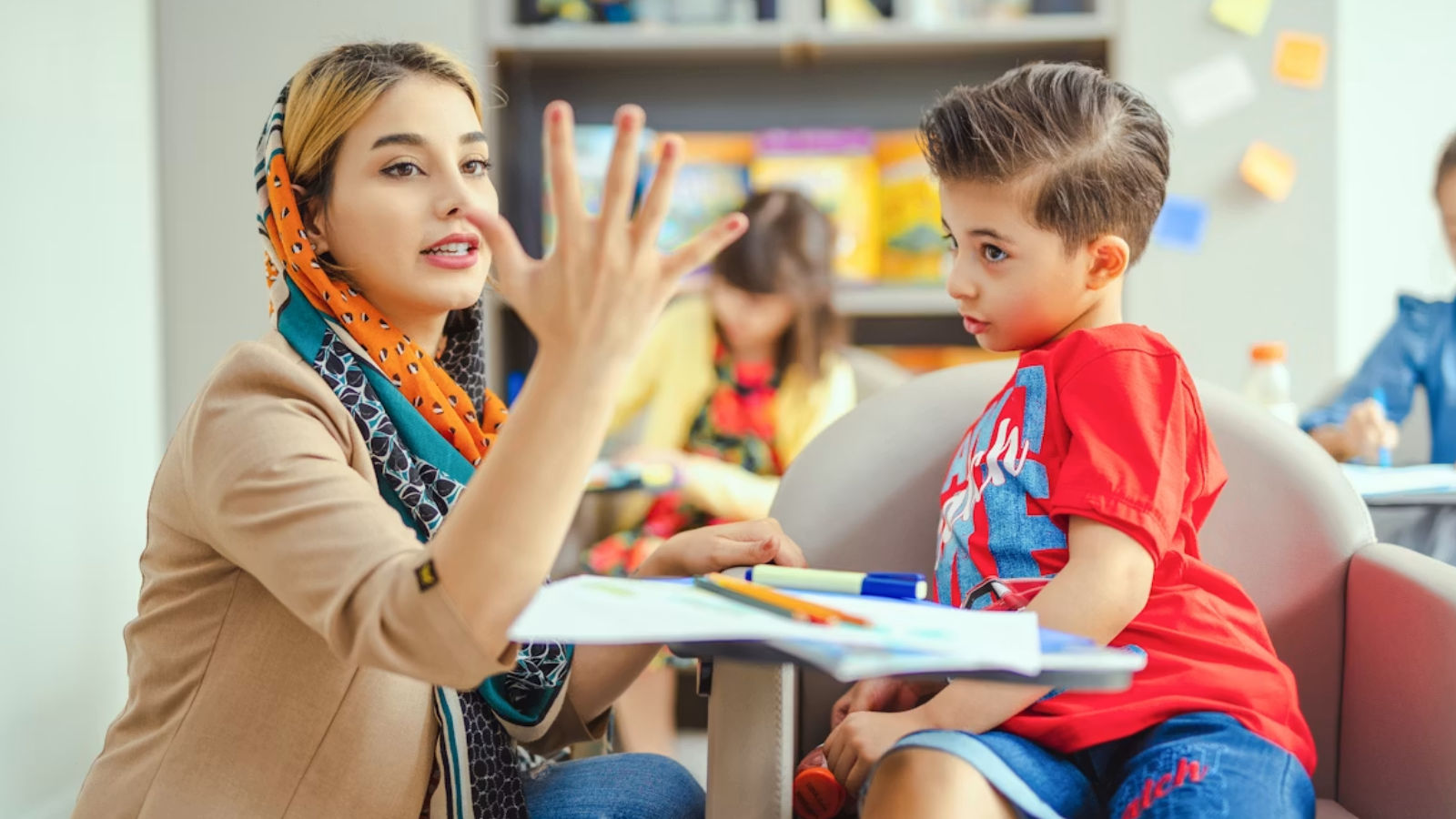
Avoiding constant translation does not mean leaving children to guess. Skilled immersion teachers have many ways to make language understandable while continuing to communicate in French.
During the preschool day, a teacher might:
- point to an object while naming it
- demonstrate an action while giving an instruction
- use pictures or other visual materials
- repeat important words and phrases in familiar situations
- use facial expressions and gestures to reinforce meaning
- model an activity before asking children to participate
Imagine a teacher asking children to wash their hands before lunch. A new student may not initially understand the French instruction, but the teacher can gesture toward the sink, demonstrate washing their hands, and repeat the phrase. The next day, the situation happens again. Eventually, the words themselves carry the meaning. That gradual connection is part of learning French naturally.
Repetition Turns Context Into Comprehension
Preschool provides an ideal setting for contextual language learning because so much of the day repeats. Children greet their teachers, gather for activities, clean up, eat meals, go outside, and prepare to go home according to familiar routines.
Each repetition provides another encounter with useful language. At first, a child may understand an instruction because everyone else begins cleaning up. Later, they recognize a key word. Eventually, the entire phrase becomes familiar.
Songs and stories work similarly. Children may not understand every word the first time they hear a French song, but the melody, movements, pictures, and repetition provide clues. With repeated exposure, sounds that were once unfamiliar begin carrying meaning.
Why Constant Translation Can Change the Experience
English still has a place when it is genuinely necessary for a child’s well-being or understanding. Immersion does not require teachers to ignore a child’s needs for the sake of maintaining French at all costs.
However, automatically translating every sentence can encourage children to wait for the English version rather than engage with French. If they know every instruction will immediately be repeated in a language they already understand, there is less reason to pay close attention to the French words, gestures, and context.
Allowing a few extra moments for comprehension gives children an opportunity to make those connections themselves. Teachers can then provide additional support when needed.
Immersion Also Encourages Active Listening
There is another skill developing during these interactions: attention. Children need to watch, listen, and consider the context around unfamiliar language. They begin noticing tone, repeated sounds, gestures, and patterns.
The American Council on the Teaching of Foreign Languages recommends extensive use of the target language in language-learning environments while making meaning understandable through context, gestures, visuals, and other supports. This gives learners meaningful exposure to the language instead of making translation the center of the experience.
For preschoolers, that meaningful exposure can happen throughout an ordinary school day. French becomes connected with people, activities, objects, emotions, and routines that children already understand.
French Gradually Becomes Part of Everyday Life
Families do not need to worry if their child comes home from French immersion unable to translate everything they heard that day. Translation is not the measure of whether immersion is working.
Progress may first appear when a child responds correctly to a French instruction, recognizes a phrase in a story, joins a familiar song, or begins using a French word spontaneously. These small moments show that the child is connecting language directly with meaning.
At Au Beau Sejour, teachers use repetition, visual cues, gestures, songs, stories, play, and daily interactions to make French understandable to young learners. Children are supported throughout the process without being expected to arrive with previous French experience or immediately understand every word.
With time and consistent exposure, French becomes less unfamiliar because children have encountered it within hundreds of meaningful moments. That is how immersion allows a new language to become a natural part of their world.