Parents often ask the same question: Is preschool too early to introduce another language?
The short answer is no. In fact, early childhood is the most natural time for language learning. Not because children need to be accelerated or pushed ahead, but because their brains are already wired for it.
During the preschool years, children are not just learning words. They are building the architecture of communication itself. Sound patterns, rhythm, tone, and meaning are absorbed effortlessly. What feels challenging to an adult feels intuitive to a four-year-old.
Understanding why early language learning works begins with understanding how young brains develop.
The Brain Is Built for Language in Early Childhood
In the first five years of life, the brain forms neural connections at an extraordinary rate. These connections are strengthened through repetition, experience, and interaction. Language is one of the most powerful drivers of that development.
Young children are especially sensitive to sound distinctions. They can hear subtle differences in pronunciation that adults often miss. This sensitivity allows them to absorb multiple languages without confusion. Rather than separating languages rigidly, the brain builds flexible pathways for communication.
Researchers often refer to this window as a period of heightened plasticity. It simply means the brain is adaptable. The earlier children are exposed to consistent language input, the more naturally those patterns become part of their communication system. This is why early language learning feels less like studying and more like play.
Why Preschool Is the Right Timing
Preschool is not about academic pressure. It is about exploration, repetition, and meaningful interaction. That environment is ideal for language immersion.
In early childhood, children are still comfortable experimenting with sound. They are not self-conscious about accents. They are not afraid to try and make mistakes. This openness makes it easier to absorb new vocabulary and sentence patterns.
The benefits of language immersion during these years are not limited to speaking ability. Immersion strengthens listening skills, attention, and working memory. Children learn to interpret meaning from context, facial expression, and tone. These skills support learning across all subjects later on.
Importantly, immersion in preschool works best when it feels natural. When language is woven into songs, routines, stories, and play, children absorb it without stress. There is no pressure to perform. Comprehension develops first, then confidence.
Early Language Learning Supports Cognitive Growth
When children are exposed to more than one language, they practice shifting attention between sounds and meanings. This strengthens executive functioning, which includes skills like problem-solving, focus, and adaptability.
Early language learning also encourages flexible thinking. Children learn that one object can have more than one name. They learn that meaning can be expressed in different ways. This flexibility supports creativity and resilience in later academic settings.
In elementary school, these cognitive strengths often show up as strong listening comprehension and the ability to adapt to new routines.
It Does Not Delay English
One of the most common concerns parents have is whether immersion might slow English development. Research consistently shows that when children are surrounded by English in their broader environment, their English skills continue to develop alongside the second language.
Language growth is cumulative, not competitive. Children are capable of building multiple language systems simultaneously. Vocabulary in one language may appear stronger at certain moments, but over time, both develop steadily.
In a French immersion school like Au Beau Sejour French Preschool, children spend their school day immersed in French, while continuing to live in an English-speaking community. This balance supports long-term bilingual development without sacrificing foundational English skills.
Learning Without Pressure

It is important to distinguish between immersion and acceleration. Early language learning is most effective when it aligns with child development rather than pushing beyond it.
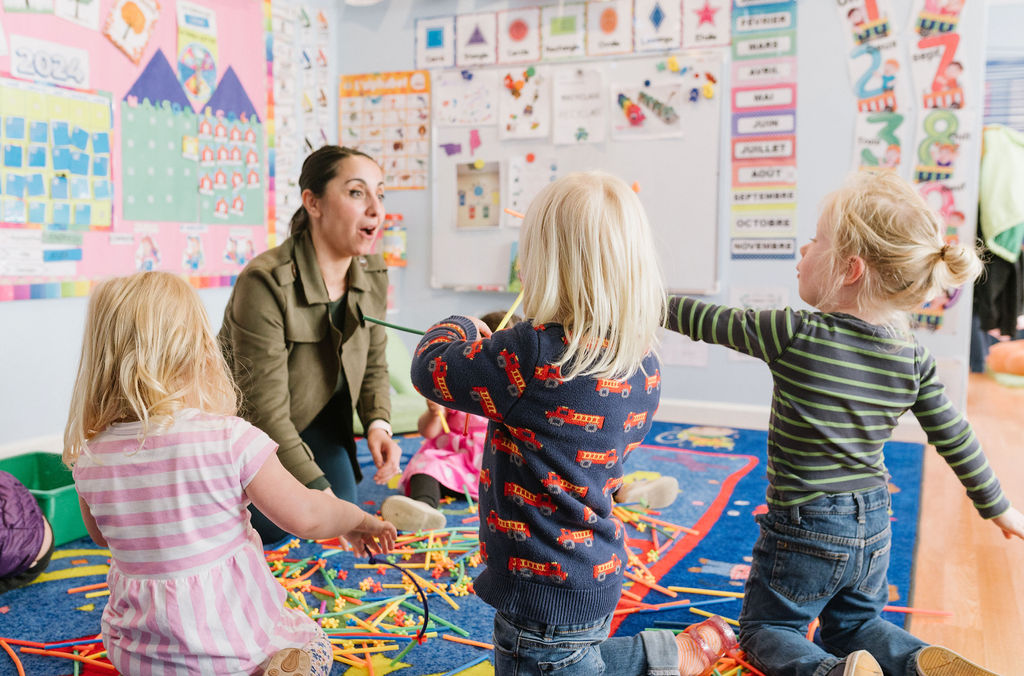
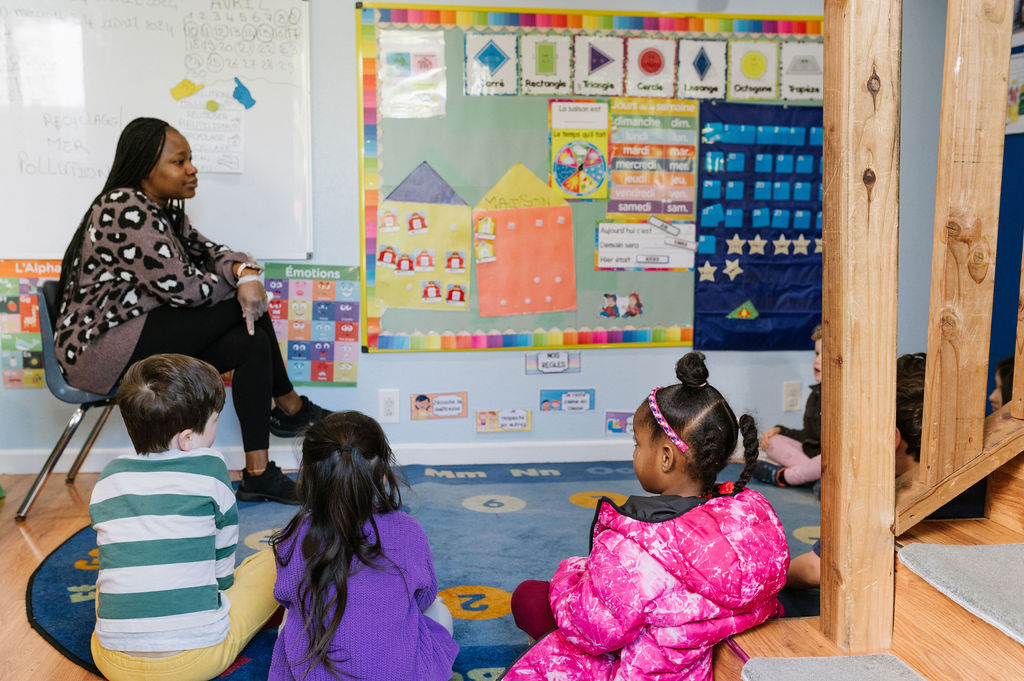
At ABS, French immersion happens through monthly themes, storytelling, music, movement, and daily routines. Children hear the same vocabulary repeated across contexts. They connect language to emotion and experience. They are not tested or rushed.
This approach supports early language learning in a way that feels calm and developmentally appropriate. Children are encouraged to participate at their comfort level. Many listen quietly before speaking. That listening period is not a delay. It is a natural part of language acquisition.
Building a Foundation for the Future
Early childhood is not just the best time to learn a second language because of brain science. It is also the best time because children are forming their identity as learners.
When language learning feels joyful and integrated into daily life, children begin to see themselves as capable communicators. They build curiosity about the world. They develop openness to different cultures and perspectives. These qualities extend far beyond vocabulary. They shape how children approach school, relationships, and new challenges.
By the time children transition to elementary school, they are not simply carrying a second language with them. They are carrying flexible thinking, strong listening skills, and confidence built through consistent exposure and supportive teaching.
A Natural Start
Early language learning works because it meets children where they are. Young brains are adaptable. Young children are fearless communicators. Preschool environments are rich with repetition, rhythm, and interaction.
At Au Beau Sejour French Preschool, language immersion is not about racing ahead. It is about honoring how children naturally learn. Through steady exposure, nurturing relationships, and thoughtful routines, children build a strong foundation that supports both language and lifelong learning.