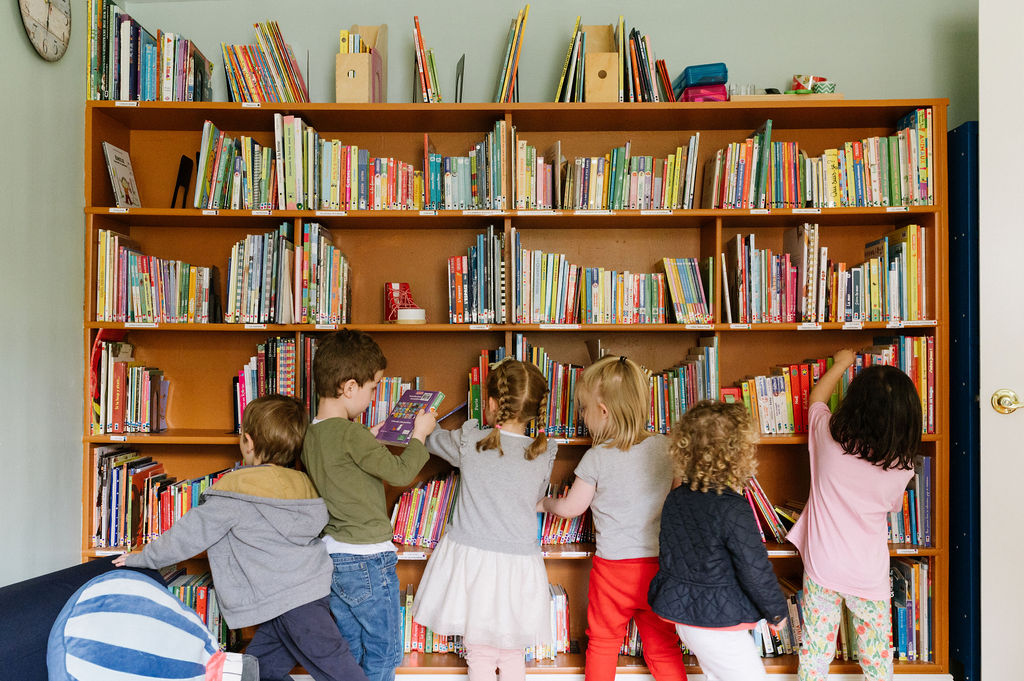
A French immersion preschool classroom introduces children to language through the moments that make up their day. Teachers greet students in French, name the materials they use, give directions during activities, sing songs, ask questions, and guide conversations at the lunch table. Because the language is connected to familiar actions and objects, children can often understand what is being said before they are ready to respond in French themselves.
At Au Beau Séjour, this exposure is strengthened through a monthly theme that carries across classroom books, songs, conversations, and activities. A topic might appear in a story one morning, return in a song later that day, and inspire an art project or imaginative activity during the week. This gives children multiple opportunities to connect words with objects, actions, and ideas. By the end of a full month of attending five days a week, many students can already understand and recognize much of the vocabulary connected to that theme, even if they are not yet ready to use every word independently.
This daily exposure helps children develop practical communication skills while strengthening their listening, memory, and comprehension. The following examples offer parents a glimpse at the preschool French children may encounter, beginning with simple words and gradually progressing toward phrases that allow them to express complete ideas.
First Words: Greetings and Polite Expressions
Greetings and courteous expressions are among the most useful starting points for young learners. Children hear them at predictable times, including arrival, departure, and meals. Repetition gives these words a clear purpose and helps children become comfortable using French during social interactions.
- Bonjour: Hello or good morning
- Salut: Hi or goodbye in an informal setting
- Au revoir: Goodbye
- À bientôt: See you soon
- S’il vous plaît: Please
- Merci: Thank you
- De rien: You’re welcome
- Excusez-moi: Excuse me
- Pardon: Sorry or pardon me
- Oui: Yes
- Non: No
These expressions also support the social-emotional side of preschool. Children practice acknowledging others, showing appreciation, taking turns, and responding appropriately in a group.
Naming the World: Colors, Numbers, and Familiar Objects
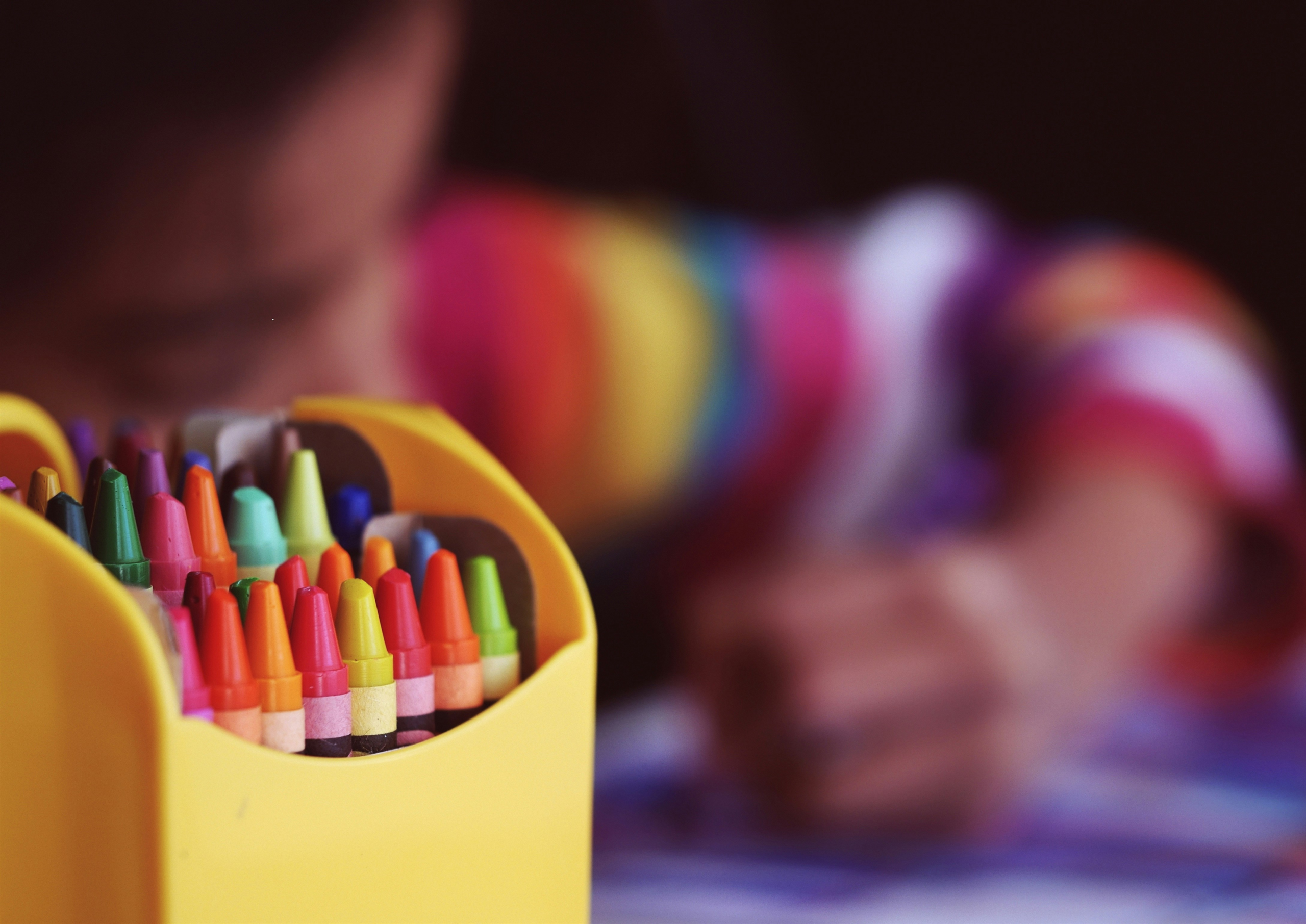
Once children begin recognizing common expressions, they can connect French words to the things they see and use. Teachers may reinforce this French vocabulary for kids through art projects, counting games, picture books, classroom labels, and cleanup activities.
- Rouge: Red
- Bleu / bleue: Blue
- Jaune: Yellow
- Vert / verte: Green
- Orange: Orange
- Rose: Pink
- Violet / violette: Purple
- Noir / noire: Black
- Blanc / blanche: White
- Un, deux, trois: One, two, three
- Un livre: A book
- Un crayon: A pencil
- Une feuille de papier: A sheet of paper
- Une chaise: A chair
- Une table: A table
- Un jouet: A toy
- Un sac à dos: A backpack
This stage helps children understand that the same object can have names in more than one language. They do not need to memorize long vocabulary lists. Instead, they learn through repeated, meaningful encounters with the words throughout the school day.
Understanding the Day: Classroom Routine Words
Routine language gives children a sense of what is happening and what will happen next. In a French immersion preschool, teachers may pair these words with gestures, visual cues, or demonstrations. Children learn to follow the routine through context while gradually developing their understanding of spoken French.
- L’école: School
- La classe: The classroom or class
- La récréation: Recess
- Le goûter: Snack time or an afternoon snack
- Le déjeuner: Lunch
- La sieste: Nap time
- Une histoire: A story
- Une chanson: A song
- Les toilettes: The restroom
- Dedans: Inside
- Dehors: Outside
- Aujourd’hui: Today
- Demain: Tomorrow
Understanding routine words can help a child feel more secure in the classroom. Even if children cannot translate each word independently, they begin to recognize patterns and anticipate the next part of the day.
Following Directions: Action Words Used in the Classroom
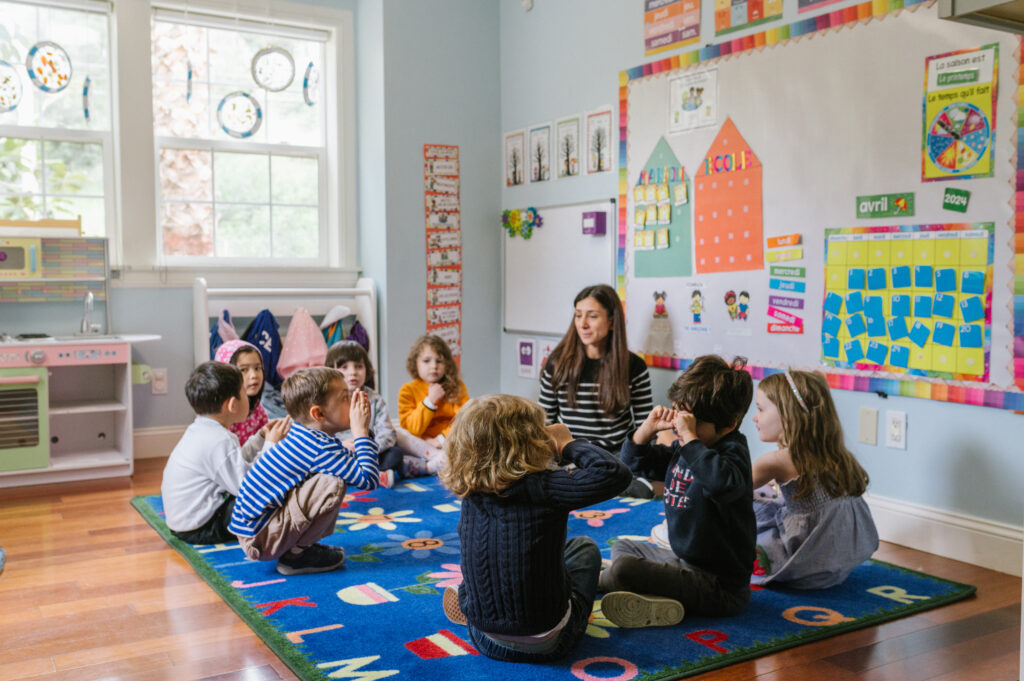
Action words move children from identifying objects to understanding instructions. These words are especially valuable because teachers can demonstrate their meaning physically. When a teacher says asseyez-vous while motioning toward the floor, for example, children can connect the spoken phrase with the expected action.
- Écoutez: Listen
- Regardez: Look
- Répétez: Repeat
- Parlez: Speak
- Chantez: Sing
- Marchez: Walk
- Venez: Come
- Attendez: Wait
- Asseyez-vous: Sit down
- Levez-vous: Stand up
- Levez la main: Raise your hand
- Faites attention: Pay attention
- Rangez: Put away or tidy up
- Partagez: Share
Learning to respond to these directions demonstrates genuine language comprehension. A child may follow a French instruction correctly long before using the same verb in conversation.
Expressing Needs & Feelings: Practical Phrases for Greater Independence
As children become familiar with classroom vocabulary, they can begin using short phrases to communicate their physical and emotional needs. These expressions help children participate more independently and give them tools for navigating the preschool day.
- J’ai faim: I am hungry
- J’ai soif: I am thirsty
- Je suis fatigué / fatiguée: I am tired
- J’ai besoin d’aide: I need help
- Je ne comprends pas: I do not understand
- Encore, s’il te plaît: More, please
- J’ai fini: I am finished
- Je peux aller aux toilettes ?: May I go to the restroom?
- Je suis content / contente: I am happy
- Je suis triste: I am sad
- Je suis fâché / fâchée: I am angry
- Je me sens mieux: I feel better
These phrases are important because they give children a reason to speak. French becomes a practical tool for solving a problem, asking for assistance, or making a choice.
Moving Into Complete Thoughts: Questions and Descriptive Phrases
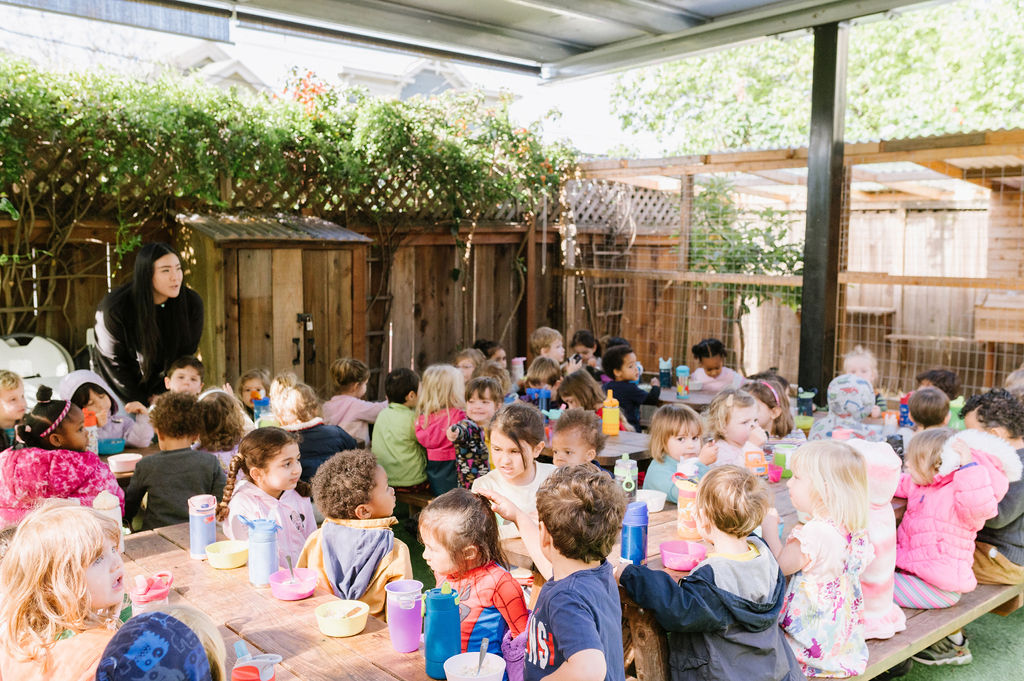
As children gain confidence, they may begin combining familiar vocabulary into longer statements and questions. This stage reflects an important shift from recognizing French to using it creatively. Children start applying language to new situations instead of repeating only memorized expressions.
- Qu’est-ce que c’est ?: What is it?
- Qui est-ce ?: Who is it?
- Où est… ?: Where is…?
- Pourquoi ?: Why?
- Je me souviens: I remember
- Je ne sais pas: I don’t know
- Montre-moi: Show me
These phrases give children the structure needed to describe, compare, question, predict, and explain. Those are valuable academic skills in any language.
Learning French Through Everyday Experience
Children in a French immersion preschool are not expected to master every word immediately. Language development takes place gradually as they listen, observe, participate, and begin experimenting with their own responses. Some children speak French early, while others spend more time absorbing the language before using it aloud.
What matters is that preschool French is connected to real experiences. Through these ordinary moments, French becomes a natural part of how children learn, play, and connect with the people around them.